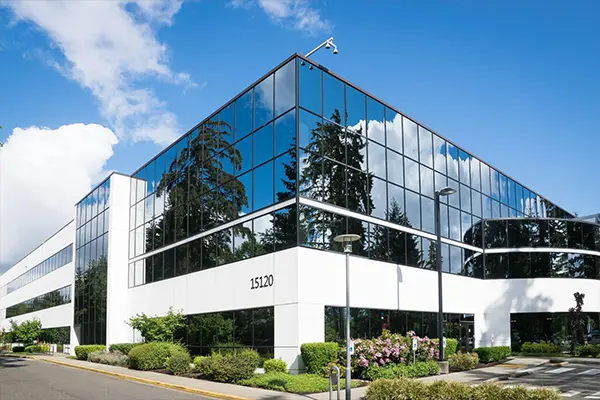
A Commercial Energy Performance Certificate (Commercial EPC), also known as a non-domestic EPC, is a legal requirement for most commercial buildings when they are constructed, sold, or let.
Clifton Energy provides expert commercial EPC surveys and non-domestic EPC assessments across London and the South East, including Slough, Reading, Crawley and surrounding areas. Utilising our deep compliance expertise, we ensure your building meets all current regulatory standards.
Contact us today to arrange an EPC survey or request a quotation.
What is a Commercial EPC
A Commercial EPC provides an asset rating based on a building’s fabric and fixed services such as heating, ventilation, cooling and lighting using standardised assumptions rather than day-to-day usage.
Non-domestic EPC ratings range from A+ (most efficient) to G (least efficient).
Every commercial EPC includes a Recommendation Report that outlines potential energy improvements to guide investment decisions.
Once completed by our accredited assessors using approved software, your non-domestic EPC is lodged directly on the national register and is typically valid for 10 years.
When is it required?
- Sell or let commercial premises.
- Complete a new non-domestic building.
- Modify a building to create separate occupiable spaces with new or extended heating, air conditioning, or ventilation systems.
How Is an EPC Rating Calculated
- The building fabric (insulation, walls, roofs and glazing).
- HVAC systems (heating, ventilation and air conditioning).
- Lighting efficiency and specification.
- System controls and renewable energy technologies.
- Fuel types and overall energy consumption.
Contact Clifton Energy Today
For Commercial Energy Performance Certificates and Surveys, contact Clifton Energy today.
Regulations in England and Wales
EPC requirements are governed through the Energy Performance of Buildings framework and MEES applies to qualifying privately rented non-domestic properties.
Regulations in Scotland
EPCs in Scotland operate under a devolved regime, with a separate register and additional requirements for larger non-domestic buildings under Section 63.
Section 63 applies to existing non-domestic buildings over 1,000 m² and is triggered when a property is sold or when a lease is granted to a new tenant.
When triggered, the building owner must undertake an assessment to identify energy efficiency improvements, record these measures in an Action Plan and either complete the improvements within 42 months or opt to defer works by reporting annual operational ratings.
Regulations in Northern Ireland
EPCs are required when buildings are constructed and before existing buildings are marketed for sale or rent; sellers/landlords are responsible for commissioning EPCs and making them available and EPCs must be produced by accredited assessors using approved software methods.

What happens during a Clifton Energy commercial EPC survey
Clifton Energy delivers thorough non-domestic EPC assessments through an assessor-led commercial EPC survey process
Pre-Survey Information & Scoping
We gather available building information, such as floor plans and HVAC details, to improve modeling accuracy
On-Site Survey
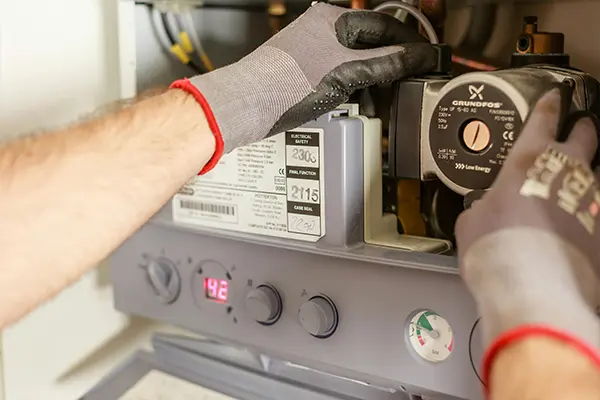
A qualified, accredited assessor visits your building to measure dimensions and collect data on the fabric, lighting and HVAC systems
Energy Modelling & EPC Calculation
Your building is modeled using approved software (SBEM and NCM) to calculate the energy performance rating
Quality Checks & EPC Lodgement
The commercial EPC is thoroughly checked and lodged on the national register for full regulatory compliance
EPC & Recommendation Report Issued
You receive a digital copy of your commercial EPC and your actionable Recommendation Report
What affects the cost of a commercial EPC?
FAQs
Commercial EPC is usually valid for 10 years. It can be reused during this period for sales or leases, though the most recent certificate supersedes previous ones
In England and Wales, owners or landlords can face fines between £500 and £5,000 if a commercial EPC is missing. Missing certificates can also delay sales, lettings, and compliance with MEES regulations
Some properties are exempt, such as certain listed buildings, temporary structures, low-energy industrial buildings, and small detached buildings under 50m². However, owners must still be able to demonstrate and justify the exemption
To obtain a non-domestic EPC, you must arrange an EPC survey with an accredited assessor. They will inspect the property, calculate the rating using approved software, and lodge the certificate on the national register
No. A commercial EPC is an asset rating based on the building’s fabric and fixed services under standardised conditions, not on the actual energy use of current occupants
Non-domestic EPCs apply to a wide range of buildings, including offices, retail units, industrial properties, warehouses, hospitality venues, and public buildings
Why choose Clifton Energy
Contact us today to arrange an EPC survey or request a quotation.